
Robbers Roost: Exploring the Outlaw History Behind the Trails
The trails of the Robbers Roost area cross more than beautiful Utah scenery. They travel through a landscape shaped by outlaws, miners, ranchers and pioneers.
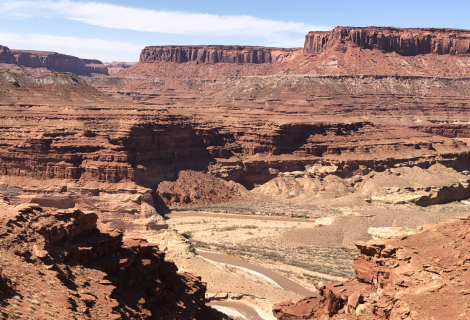
Located in southeastern Utah, primarily in Wayne and Garfield counties, Robbers Roost lies between the Dirty Devil River, Green River and Henry Mountains. Its steep canyon walls, narrow passages and hidden ravines created a natural refuge that was difficult for outsiders—and especially lawmen—to enter.
Today, the Robbers Roost Trail Systems allow visitors to explore this rugged landscape while discovering the stories that shaped it.
Why Is It Called Robbers Roost?
Robbers Roost earned its name as a hiding place for cattle rustlers, horse thieves and other outlaws.
Its maze of canyons provided hidden camps, lookout points and multiple escape routes. The heat, isolation and difficult terrain made pursuing anyone into the area extremely challenging.
By the late 1800s, Robbers Roost had become an important stop along the Outlaw Trail, a network of hideouts stretching across the West from Mexico to Canada.
Outlaws used the area before the arrival of the famous Wild Bunch. During the 1870s, horse thieves such as Cap Brown reportedly moved stolen animals through the region. Later, the Roost became closely associated with Butch Cassidy and his companions.
Butch Cassidy and the Wild Bunch
Robert LeRoy Parker, better known as Butch Cassidy, became familiar with Robbers Roost while he was young. He reportedly rustled cattle with Mike Cassidy, whose surname he later adopted.
During the 1890s and early 1900s, Robbers Roost became a sanctuary for Cassidy and the Wild Bunch. After robbing the San Miguel Valley Bank in Telluride, Colorado, Cassidy and several associates reportedly hid in the Roost. Cassidy and Elzy Lay are also said to have organized their gang while staying there.
Authorities attempted to pursue the outlaws, but the Roost was never successfully raided. Concealed ravines, natural lookout points and difficult approaches gave anyone familiar with the country a considerable advantage.
Reminders of this period include a Wild Bunch corral, a stone cabin chimney, shelter caves and historic carvings.
The Story of Butch Cassidy and Harry Ogden
One local story presents Butch Cassidy as an outlaw who followed his own code.
In 1898, 16-year-old Harry Ogden of Escalante had saved enough money to purchase a horse and new saddle. While riding near Robbers Roost, he encountered an outlaw who stole the horse and left him to walk home.
Several weeks later, two riders arrived at the Ogden family ranch. One was the thief, still riding Harry’s horse. The other was Butch Cassidy.
Cassidy asked Harry whether he had recently lost a horse. After Harry identified it, Cassidy ordered the thief to dismount. Harry received his horse and saddle, while the thief was sent into the desert on foot.
The story contributed to Cassidy’s reputation as a fair-minded outlaw. Banks and trains may have been acceptable targets in his world, but stealing from a hardworking young cowboy apparently crossed a line.
Gold Mining in the Henry Mountains
The possibility of striking it rich also brought prospectors into the Henry Mountains during the late 1800s.
Gold discoveries helped establish the Henry Mountains Mining District. In 1889 and 1890, Jack Sumner and other prospectors found gold in Bromide Basin on Mount Ellen. The discovery led to the creation of Eagle City near Crescent Creek.
The short-lived settlement included stores, a hotel, saloon, doctor’s office, dance hall and post office.
Like many Western mining towns, its success did not last. Gold-bearing ore appeared in small, inconsistent pockets, while deeper shafts encountered water. The mill burned in 1911 and was never rebuilt.
The remains of Eagle City and nearby mining sites now offer trail riders and history enthusiasts a glimpse into Utah’s boom-and-bust mining era.
The Legend of the Lost Josephine Mine
One of the Henry Mountains’ greatest mysteries is the legendary Lost Josephine Mine near Mount Pennell.
According to the story, Spanish miners discovered a rich source of gold but were attacked during a rebellion. The mine entrances were sealed, and a curse was supposedly placed on anyone who attempted to reopen them.
In 1868, a prospector named Burke reportedly arrived at a stage station carrying a gold nugget from the Henry Mountains. He returned with Ben Bowen and a man named Blackburn.
The group allegedly found a rich vein and removed hundreds of pounds of gold-bearing quartz. Their expedition ended in illness and tragedy. Bowen and Burke died, while Blackburn reportedly experienced years of misfortune.
Mining engineer Edwin T. Wolverton later spent years searching Mount Pennell for the lost mine. A wheel from his mining operation is preserved at the Bureau of Land Management office in Hanksville.
Whether the mine was real or legendary, its story remains part of the mystery surrounding the Henry Mountains.
Ticaboo and Utah’s Uranium Era
Mining continued to influence the region during the 20th century.
Ticaboo, near Lake Powell and the Henry Mountains, was developed during the uranium boom of the late 1970s and early 1980s. The community supported workers at the Tony M Mine and Shootaring Canyon Uranium Mill.
Because of its remote location, Ticaboo was built as a complete community with paved streets, housing, a school, motel, restaurant, grocery store and RV park.
The uranium industry did not bring the lasting population planners expected. Ticaboo eventually became a much smaller community, but the local lodge continues to serve travelers exploring Lake Powell, the Henry Mountains and surrounding trails.
Ranching and Pioneer Life in Rabbit Valley
The trail region also reflects the history of Utah’s early ranchers and settlers.
Rabbit Valley in Wayne County was settled primarily by Mormon pioneers during the late 1870s. Its name came from the abundance of rabbits observed by early explorers and militia members.
Settlers established homesteads, raised livestock and built sawmills in the remote, high-elevation landscape. Ranching became central to the economy, with families moving cattle and sheep through the surrounding valleys and mountains.
Life required seasonal roundups, long livestock drives and preparation for deep snow. Women and children also played important roles in ranch work and community building.
Many trails in the area follow routes once used to move cattle, sheep and timber.
The Sawmills That Helped Build Wayne County
Timber was essential to early settlement. Higher-elevation forests provided lumber for homes, barns, churches and other buildings.
One of the area’s first sawmills was established near Mill Meadows by William Wilson Morrell. Powered by local streams, the mill processed logs hauled by ox teams from places such as Pole Canyon.
The mill eventually burned, but a turbine from the operation is preserved at Fremont Park.
These timber routes, ranch roads and mining paths helped create the trail network visitors explore today.
Ride Through the Stories of Robbers Roost
Robbers Roost is a landscape shaped by people who depended on its remoteness, resources and natural defenses.
Outlaws disappeared into its canyons. Prospectors searched its mountains for gold. Ranchers moved livestock across its valleys. Pioneer families hauled timber from its forests.
When you explore the Robbers Roost Trail Systems, you are traveling through those stories.
Take time to notice the old roads, mining remnants, changing terrain and distant mountain views. Each trail offers another connection to the people and legends that made this rugged corner of Utah unforgettable.